

Debt does not usually start as a crisis.
It becomes one when payments begin taking up more space in your budget than you ever expected.
We meet people across El Paso every week who thought they were doing everything right. Like they make minimum payments, juggle balances, and try to stay ahead.
Until interest rates and unexpected expenses catch up with them.
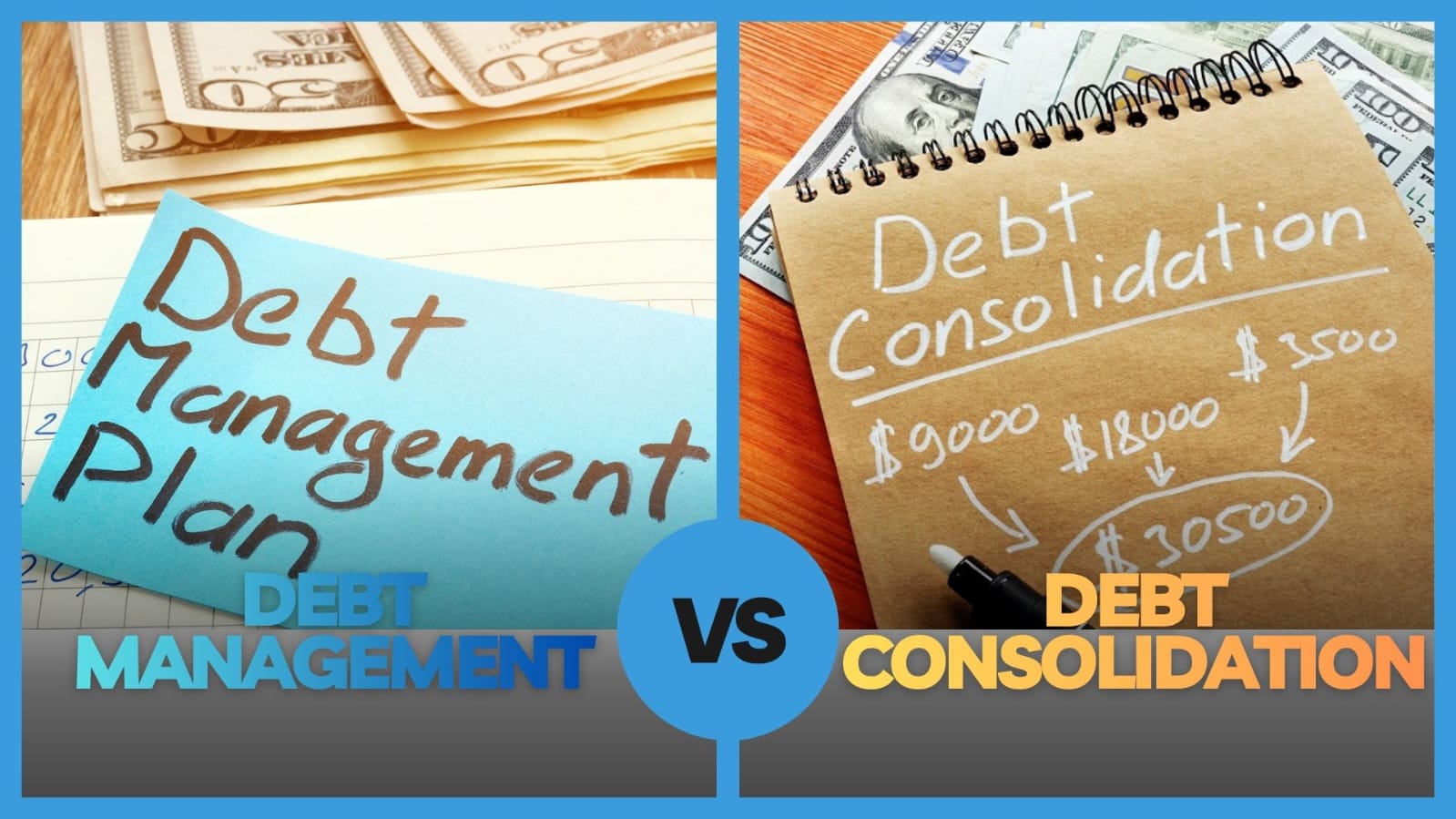
Debt management and debt consolidation sound similar.
Both promise simpler payments and a path out of debt.
But after years of helping families rebuild their finances, we can tell you something important right away:
They solve problems in very different ways.
Understanding debt management vs consolidation is not about choosing whichever sounds easier. It is about choosing what actually works for your situation.
Why Debt Feels Especially Heavy for Many El Paso Families
El Paso has always been a hardworking community.
Many households here balance multiple jobs, family responsibilities, and rising everyday costs. Medical bills, car repairs, and unexpected emergencies end up on credit cards simply because there is no other option at the moment.
Data from the Urban Institute shows a significant percentage of residents in El Paso County have debt in collections, especially medical debt.
That tells us something we already see firsthand: people are not careless with money. Most are dealing with circumstances that snowball faster than expected.
When payments start competing with groceries or rent, stress builds quickly.
That is where everyone needs structured solutions.
What Debt Management Really Looks Like in Real Life
Debt management is not about taking on another loan.
Instead, it is a guided repayment plan built around your actual financial life.
When someone comes to Credit Services of America, the first step is simply understanding the full picture. Income, expenses, balances, interest rates and everything that matters. Many clients are surprised to learn how much of their payment is going toward interest instead of reducing debt.
Through a debt management plan, counselors work directly with creditors to request better repayment terms. In many cases, that can mean:
- Reduced interest rates
- Fewer penalty fees
- A single monthly payment instead of several
You are still paying what you owe.
The difference is that payments finally start moving balances down instead of keeping you stuck.
Most plans run three to five years, which may sound long at first.
But compared to decades of minimum credit card payments, many clients find relief in finally having a finish line.
Why Some People Prefer Debt Management
Debt management introduces a structure where stress and confusion used to exist. Many clients come in exhausted from remembering due dates or worrying about late fees. A consolidated payment schedule removes that daily pressure.
There is also accountability involved.
You are not just handed paperwork and sent on your way.
Budget discussions become part of the process because long-term financial recovery is not only about numbers, it is about habits.
We have seen families who once relied heavily on credit cards gradually rebuild savings simply because they finally had a workable plan.
The Tradeoffs People Should Know About
Debt management is not designed to keep credit cards active.
Accounts included in a program are usually closed so balances can be paid down responsibly. For people who are used to keeping credit cards available for emergencies, that change can take some getting used to at first.
Some clients notice a temporary credit score dip early on.
But as balances shrink and consistent payments build history, many begin to see improvement over time.
For people who want lasting change rather than quick relief, that trade-off is better.
Understanding How Debt Consolidation Works
Debt consolidation takes a different approach to managing debt by combining multiple balances into a single new loan.
Instead of trying to work out new terms on every account, debt consolidation lets you pay everything off with one loan.
That way, you only have to worry about a single monthly payment.
If your credit is in good shape, you might even get a lower interest rate, which can make your payments more manageable. For many of the people we work with, having just one due date to remember takes a huge load off their shoulders.
When income is steady and spending habits are solid, consolidation can be a simple, effective way to get back in control of money that was starting to feel stressful.
What Usually Happens After Debt Is Consolidated
Here is the honest part that many advertisements do not mention.
Debt consolidation works best when spending habits are already under control.
A common situation looks like this:
- Someone takes out a consolidation loan and pays off credit cards successfully.
- Suddenly, those cards have available balances again.
- Without a structured plan, unexpected expenses creep back in.
Now there is a loan payment and new credit card balances. Forbes Advisor surveys have found that many borrowers still miss payments after consolidating debt because the underlying financial pressure did not change.
The loan simplified payments, but it did not address the cause. That does not mean consolidation is bad. It simply means it is not right for everyone.
Debt Management vs Consolidation: The Real Difference
The easiest way to understand the difference is:
| Category | Debt Management | Debt Consolidation |
| Core Approach | Restructures how you repay existing debts with negotiated terms. | Combines multiple debts into a new loan. |
| What Happens to Your Debt | You repay original balances under improved repayment conditions. | Existing debts are paid off and replaced with a new loan. |
| Monthly Payments | One structured payment is distributed to creditors through a repayment plan. | One payment made directly to the consolidation lender. |
| Interest Rates | Often reduced through creditor negotiation. | Depends on credit score and loan approval terms. |
| Credit Requirements | Typically available even if credit scores have dropped. | Usually requires fair to excellent credit for favorable rates. |
| Best For | High credit card interest, missed payments, or overwhelming balances. | Borrowers with steady income and strong credit profiles. |
| Financial Support | Includes budgeting help and financial counseling. | Generally does not include financial coaching. |
| Risk Factors | Credit card accounts may be closed during repayment. | Risk of new debt accumulation if credit cards are reused. |
| Primary Goal | Faster payoff through structured repayment and lower interest pressure. | Simplify payments and potentially reduce interest costs. |
People dealing with high interest rates, missed payments, or overwhelming balances benefit more from structured debt management.
What We Recommend for El Paso Residents
Living in El Paso is not always easy.
Many families here are balancing fluctuating work hours, cross-border commuting expenses or medical costs that insurance does not fully cover.
When cash flow is tight, adding another loan payment sometimes creates more pressure instead of less.
That is why many clients exploring options like “debt consolidation services El Paso TX” are surprised when a debt management plan ends up being the more sustainable option.
Instead of qualifying for another lender, they gain negotiating support and financial coaching at the same time.
And for many households, that combination makes the difference between temporary relief and long-term recovery.
Signs Debt Management Might Be the Better Fit
You may want to consider debt management if:
- Minimum payments barely reduce balances.
- Interest charges feel impossible to overcome.
- You have already missed payments.
- Budgeting feels stressful without guidance.
Many people come in assuming bankruptcy is their only option and leave realizing they simply needed a better structure.
When Consolidation May Be Better
Debt consolidation can work well if:
- Your credit score qualifies for competitive loan rates.
- Your income is stable.
- You are confident you would not reuse paid-off credit cards.
In those situations, a consolidation loan can speed up repayment while simplifying finances.
Final Thoughts
One thing we have learned after helping thousands of clients is that debt stress grows when people wait too long.
Shame or frustration keeps many families from asking questions before major problems.
But debt problems are financial situations, not personal failures.
Whether someone chooses debt management vs consolidation, progress usually begins with a clear conversation about goals and realistic payment options.
Credit Services of America helps people understand their choices and build a financial plan they can actually live with.
Our counselors work directly with individuals and families across El Paso to review your situation honestly.
Schedule a confidential consultation today and become debt-free with a plan you can trust.
